
“They wanted to perform, but they wanted to do it in a healthy way that they could sustain for decades”
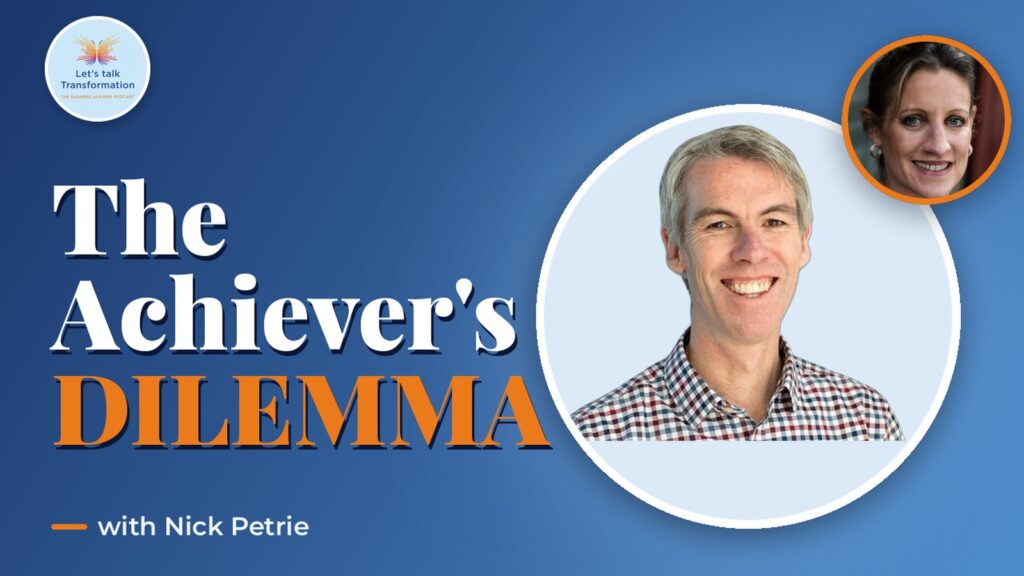
The modern workplace demands more, faster, and better results every single day, and AI is increasing the speed. Nick and I examine how professionals grapple with overloaded systems that fail to support human flourishing : Relentless workloads, constant change, and blurred boundaries create high levels of stress and burnout.
Many organizations treat these pressures as inevitable costs of doing business. Yet, the traditional formula of pushing through no longer serves modern professionals. Sustainable performance requires a new approach to daily work habits.
Organizations often define resilience as pushing through exhaustion regardless of the personal cost. Companies reward workers who say yes to every request and maintain zero boundaries. While this strategy works early in a career, it fails to scale over decades. High performers eventually hit a wall where constant grinding leads to physical and mental exhaustion. Evolving the professional approach becomes necessary as job demands and responsibilities increase. Sustainable success requires balancing high output with long-term health and well-being.
Studying high performers reveals a tiny group of individuals who combine high output with very low burnout risk and Nick researched their habits, mindsets and perspectives to ascertain how they did this.
Thrivers possess a high degree of reflectiveness and self-awareness regarding their working habits. When Nick reached out to these busy executives for research interviews, they responded promptly and made time to talk. They recognize early in their careers that relentless grinding leads to diminishing returns. Instead of reacting to every demand, they design structured rhythms into their daily routines. Their ability to step back and evaluate their operating systems protects them from the heavy toll of chronic stress. We look more closely at :
The Power of Pulsing and Daily Rhythms – Nature operates on steady rhythms like breathing, heartbeats, and changing seasons. Human workers often abandon these natural rhythms by locking into a single mode of high intensity for hours. thrivers incorporate pulsing into their daily schedules.
Crossing the Karman Line: Transitioning Home : Space shuttles encounter extreme thermal and kinetic pressure during atmospheric reentry. NASA engineers use precise maneuvers to slow the spacecraft down before it crosses the Karman line. Without this deceleration, the shuttle experiences uncontrolled reentry and structural failure. Human workers often behave like the unmitigated spacecraft. They maintain high operational speed throughout the workday, take business calls during the commute, and burst through home doors while still mentally at the office.
Shifting From Doer to Grower : Many professionals define their personal worth entirely through individual task execution. Earning recognition and status by doing everything oneself creates a dangerous dependency loop. Plant managers and corporate leaders often find themselves answering emergency calls at three in the morning. This reliance on personal heroics acts as a severe handbrake on long-term professional growth.
Navigating the AI Era Without Burning Out : Artificial intelligence promises massive productivity gains for modern organizations. However, the introduction of AI agents often accelerates the workplace treadmill instead of creating breathing room. Professionals face constant context switching as they manage multiple automated workflows simultaneously. Without careful boundaries, AI fills every available gap in the daily schedule.
Designing Conditions for Deep Work : Uninterrupted focus remains scarce in organizations dominated by back-to-back meetings and constant notifications. Deep work requires sixty to ninety minutes of intense concentration on complex, high-value tasks. Most professionals crave this focused environment yet struggle to find the necessary time.
Burnout rarely stems from a single isolated trigger. It accumulates through heavy workloads, internalized pressure to endure, and minds that refuse to disconnect. The AI era threatens to amplify these exhaustion cycles unless professionals exercise intentional agency. Adopting sustainable habits requires stepping away from the daily dance floor and viewing the system from the balcony. Professionals must evaluate whether their daily routines involve healthy pulsing or destructive grinding.
The main insights you’ll get from this episode are :
- Thrivers’ take time (out of their busy schedules) to think, reflect and talk.
- Long-term performance and success require rest and a more holistic approach.
- Thriving needs a scalable strategy that evolves with different situations/roles.
- Intentional ‘pulsing’ – as opposed to the daily grind – is reminiscent of the rhythms of nature.
- A daily ‘calming line’ is also helpful as a tool to dissipate energy, control re-entry, and ensure a safe landing (cf. space shuttle transition to earth’s orbit).
- If leaders can become ‘growers’ (of other people) rather than ‘doers’, this frees them up; it is a slow process but a great investment over time.
- AI can fill all the time you have at work and at home, not allowing for pulsing or calming lines – thrivers build back in chosen constraints.
- Three groups of emerging of AI users: avoiders (fear, environmental reasons), dependant users (cognitive erosion); and power users (deliberate adopters).
- Power users thrive in the AI world because they engage in deep work, i.e. uninterrupted, cognitively straining, high-value work.
- Deep work requires peak cognitive alertness; a suitable place to do it; and clear priorities/tasks.
- AI will see a leader’s role move from controller to orchestrator, with deep work more important in the AI workplace.
- An orchestra without a conductor is messy, noisy, and conflicted and the human role is moving up the value chain, e.g. decision- and sense-making, judgement.
- Subtraction rather than addition to workload is intentional design to create space (collectively and individually) for behavioural change.
- AI deployment has increased productivity but also expectations of productivity = life is faster.
- Thoughtful design requires thoughtful leaders who look at redesigning the system, not bolting AI on to existing scenarios.
Find out more about Nick and his work here
https://www.linkedin.com/in/nick-petrie-1b60156/
https://www.amazon.com/Burn-Bright-Sustain-Performance-Always/dp/0008770700
For more information on this episode please visit www.transformforvalue.com/podcast
To carry on developing your leadership and building a relevant & high performing team, connect with me here : https://calendly.com/transformforvalue/connect